
Back to Patient Portal
Gastric bypass has long been considered the gold standard in weight loss surgery, and it remains one of the most performed bariatric procedures worldwide. A robot-assisted gastric bypass is the same operation, performed using a robotic surgical system that supports the surgeon during the more intricate parts of the procedure.
In this article, we cover:
- What a robot-assisted gastric bypass is
- How the procedure is performed
- How it differs from a standard laparoscopic gastric bypass
- When a robotic approach may be considered
- The potential benefits and limitations
- What to expect from surgery and recovery
What is a robot-assisted gastric bypass?
A gastric bypass is a bariatric surgery procedure in which most of the stomach is bypassed, rather than removed. A small stomach pouch of 15–30mL is created, and food then passes from this pouch directly into a loop of the small bowel (the jejunum) for digestion. This restricts how much you can eat, alters the hormones that drive hunger, and reduces the absorption of certain foods.
There are several variations of the procedure, including the Roux-en-Y gastric bypass (banded or unbanded), the Mini Gastric Bypass and the One-anastomosis Gastric Bypass. Patients can lose 30–50% of their total body weight, with long-term results that have been documented for up to 20 years.
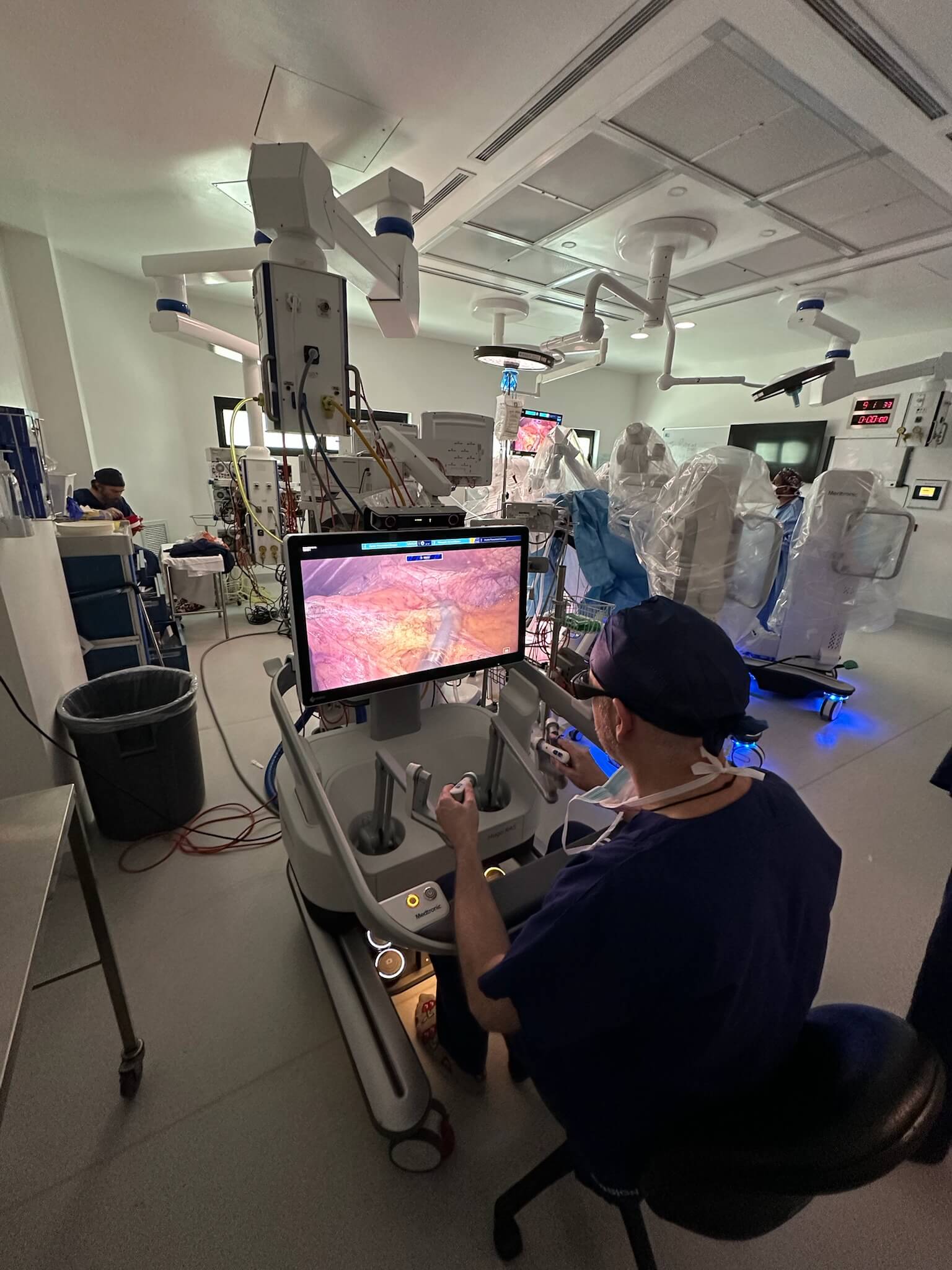
A robot-assisted gastric bypass is the same operation, performed with the help of a robotic surgical system. As with all robotic procedures, the surgeon remains in full control at all times. The technology is used to enhance precision, not replace the surgeon’s judgement or expertise.

How does robot-assisted gastric bypass work?
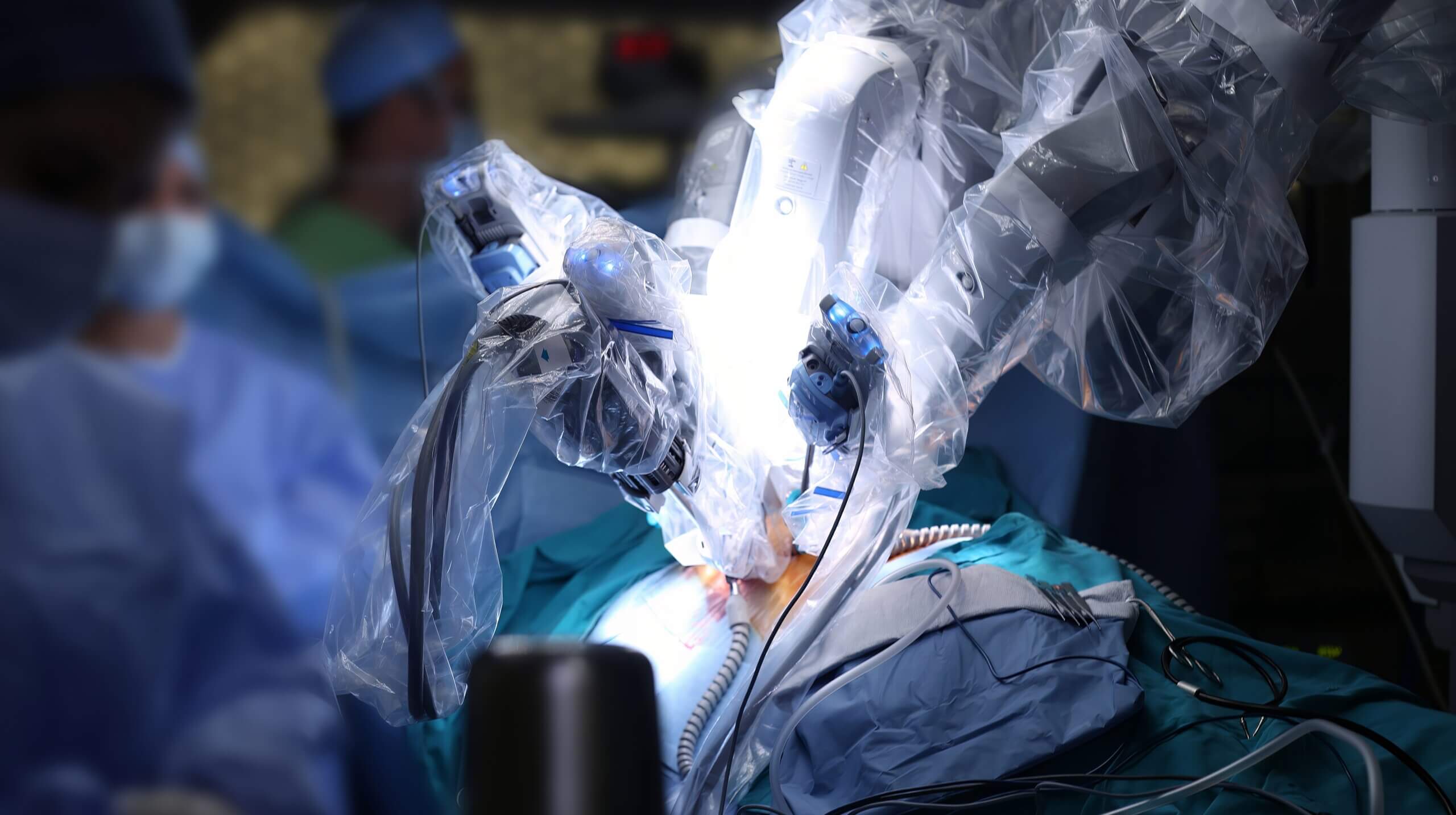
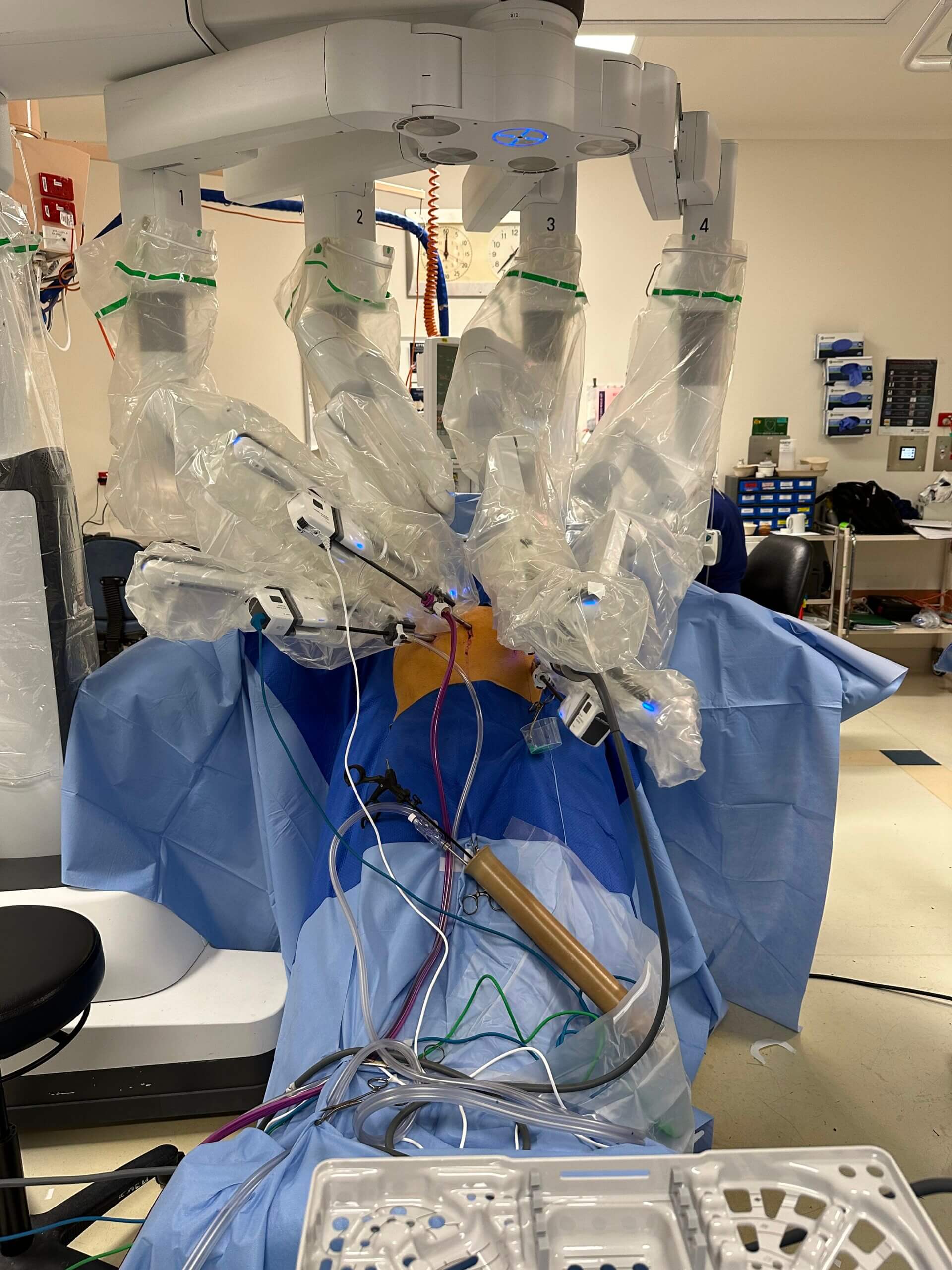
The procedure is performed through small keyhole incisions, just as in laparoscopic surgery. A high-definition camera and wristed instruments are inserted into the abdomen, and the surgeon operates from a console nearby, controlling the instruments with a highly refined range of motion.
- A magnified, high-definition 3D view of the surgical field
- Wristed instruments that move with greater flexibility than standard laparoscopic tools
- Tremor filtration for steadier movements during fine suturing
- Improved access in deeper or more confined parts of the abdomen
- Reduced surgeon fatigue during longer, multi-step procedures
These features can be especially helpful when working with patients with a higher BMI, in whom access to the upper part of the stomach can be more challenging.
Robotic vs laparoscopic gastric bypass
Laparoscopic gastric bypass is the established standard for this procedure and produces excellent outcomes for most patients. Robotic surgery builds on this minimally invasive approach, but it is not required for every patient.
Laparoscopic gastric bypass:
- Widely used and well established
- Excellent long-term outcomes
- Minimally invasive with small incisions
Robot-assisted gastric bypass:
- Enhanced 3D visualisation
- Greater instrument flexibility and surgeon control
- May be particularly helpful in technically more challenging or complex cases
When is a robotic approach considered?
For many patients, laparoscopic gastric bypass remains the most appropriate option. A robotic approach may be considered in:
- Patients with a higher BMI, for whom access to the upper stomach is more difficult
- Cases involving significant intra-abdominal adhesions or scarring
- Revisional bariatric surgery, such as conversion from a sleeve to a bypass, or revision of a previous bypass
- Situations where additional precision and control may benefit the outcome
Revisional bariatric surgery is one area where robotic technology is particularly well-suited, as scar tissue from previous operations can make the anatomy more difficult to work with.
Benefits of robot-assisted gastric bypass
In selected cases, a robotic approach may offer:
- Greater precision when creating the pouch and bowel connections
- Improved visualisation in patients where access is challenging
- More controlled suturing, supported by tremor filtration
- Reduced surgeon fatigue during longer, multi-step procedures
- A recovery profile similar to laparoscopic surgery
It’s important to note that outcomes are already excellent with laparoscopic gastric bypass. Robotic surgery is best viewed as an additional tool that can be used when it offers a clear advantage.
Are there any risks or limitations?
All bariatric surgery carries some risk, including bleeding, infection and leaks at the surgical join points. A gastric bypass also affects how your body absorbs food, so all patients need lifelong vitamin and mineral supplementation, including a daily multivitamin and at least six-monthly vitamin B12 injections. Many patients also need additional iron, calcium and vitamin D.
Dumping syndrome, where food (particularly sugar) moves through the digestive system too quickly, can affect up to 50% of bypass patients to some degree. It usually improves over time with dietary changes, such as smaller meals, avoiding high-sugar foods and drinking fluids between meals rather than with them.
Robotic technology does not eliminate any of these risks. The equipment used in robotic surgery also costs more than standard laparoscopic equipment, and not all of this is covered by private health funds. Our team will always provide a clear cost estimate before surgery.
What to expect from surgery and recovery
Robot-assisted gastric bypass is performed under a general anaesthetic. Recovery is generally similar to laparoscopic gastric bypass, as both are minimally invasive techniques.
Most patients:
- Stay in hospital for 2–3 days
- Begin a staged diet plan after surgery, progressing from liquids to soft foods, then to regular meals
- Return to work within around two weeks, depending on the nature of their job
Long-term success depends on combining surgery with healthy eating habits, regular activity, consistent vitamin supplementation and ongoing follow-up. Our patients have access to follow-up appointments with a bariatric specialist for up to three years after surgery, included as part of the clinic fee.
When should you seek advice?
If you’ve been considering bariatric surgery and would like to understand whether a laparoscopic or a robot-assisted approach is right for you, it’s worth speaking to a specialist. Eligibility, expected outcomes, and the most appropriate technique are best discussed in person.
Contact our team if you would like more information, or book an appointment with one of our specialists.
Ready to take the next step?
Contact us to discuss your options, eligibility and the best treatment plan for you.

0 Comments