


How Obesity Affects Your Upper Gastrointestinal Health (and What Weight Loss Can Change)
When we talk about the health effects of obesity, the conversation usually turns to the heart, blood pressure, joints or diabetes. The digestive system rarely gets a mention, yet the upper gastrointestinal (GI) tract - oesophagus, stomach and nearby organs - is one of...

I Have Reflux. Is the Gastric Sleeve or Bypass Better for Me?
This is one of the most common and most important questions we're asked by patients choosing between bariatric surgery options. If you already have reflux, it deserves a proper answer, because the two main operations affect reflux very differently. The short...

Can Bariatric Surgery Cause Gallstones?
Gallstones are one of the more common issues that can come up after bariatric surgery, and for a simple reason. The same rapid weight loss that makes bariatric surgery so effective is also one of the biggest triggers for gallstones. The reassuring part is that this is...

What is robot-assisted gastric bypass?
Gastric bypass has long been considered the gold standard in weight loss surgery, and it remains one of the most performed bariatric procedures worldwide. A robot-assisted gastric bypass is the same operation, performed using a robotic surgical system that supports...

Robot-assisted revision bariatric surgery
Revision bariatric surgery is one of the most technically demanding categories of upper GI surgery, and it is also one of the strongest use cases for a robotic-assisted approach. The same features that make revision difficult, including scar tissue, altered anatomy...
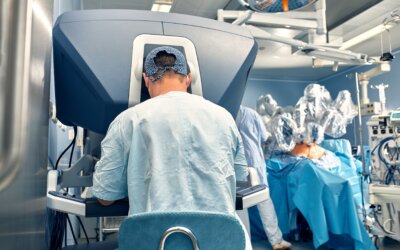
What is robot-assisted sleeve gastrectomy?
Robot-assisted sleeve gastrectomy is a modern approach to one of the most commonly performed bariatric procedures worldwide. It uses an advanced robotic surgical system to support the surgeon during a gastric sleeve, with the aim of enhancing precision, visualisation...