
Back to Patient Portal
Revision bariatric surgery is one of the most technically demanding categories of upper GI surgery, and it is also one of the strongest use cases for a robotic-assisted approach. The same features that make revision difficult, including scar tissue, altered anatomy and the need for careful suturing through tissue that has already been operated on, are exactly the features a robotic platform is built to handle.
In this article, we cover:
- What is robot-assisted revision bariatric surgery
- Why the robotic platform is well-suited to revision
- The types of revision where it is most useful
- The benefits and drawbacks of a robotic approach
- What to expect from surgery and recovery
What is robot-assisted revision bariatric surgery?
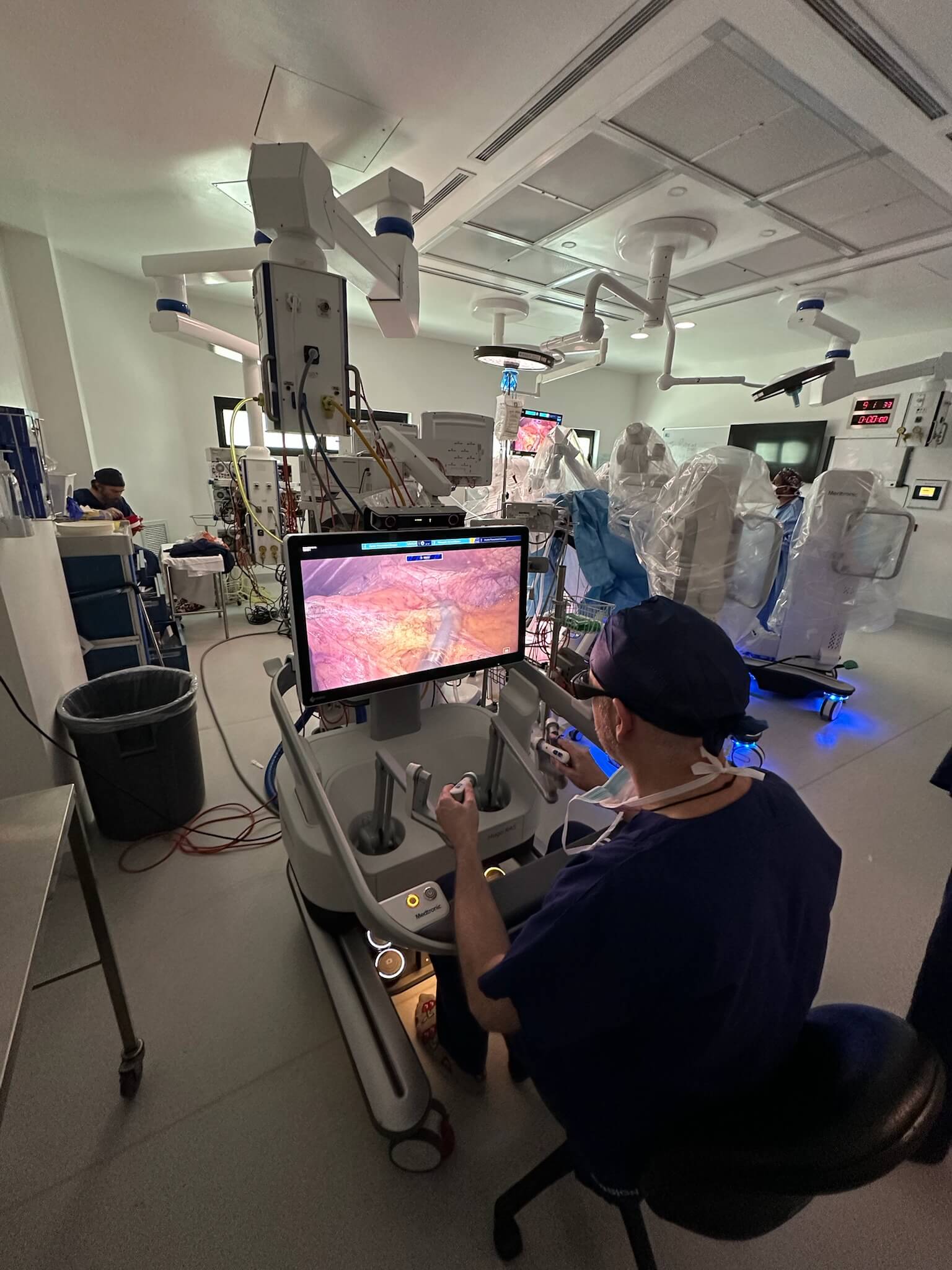
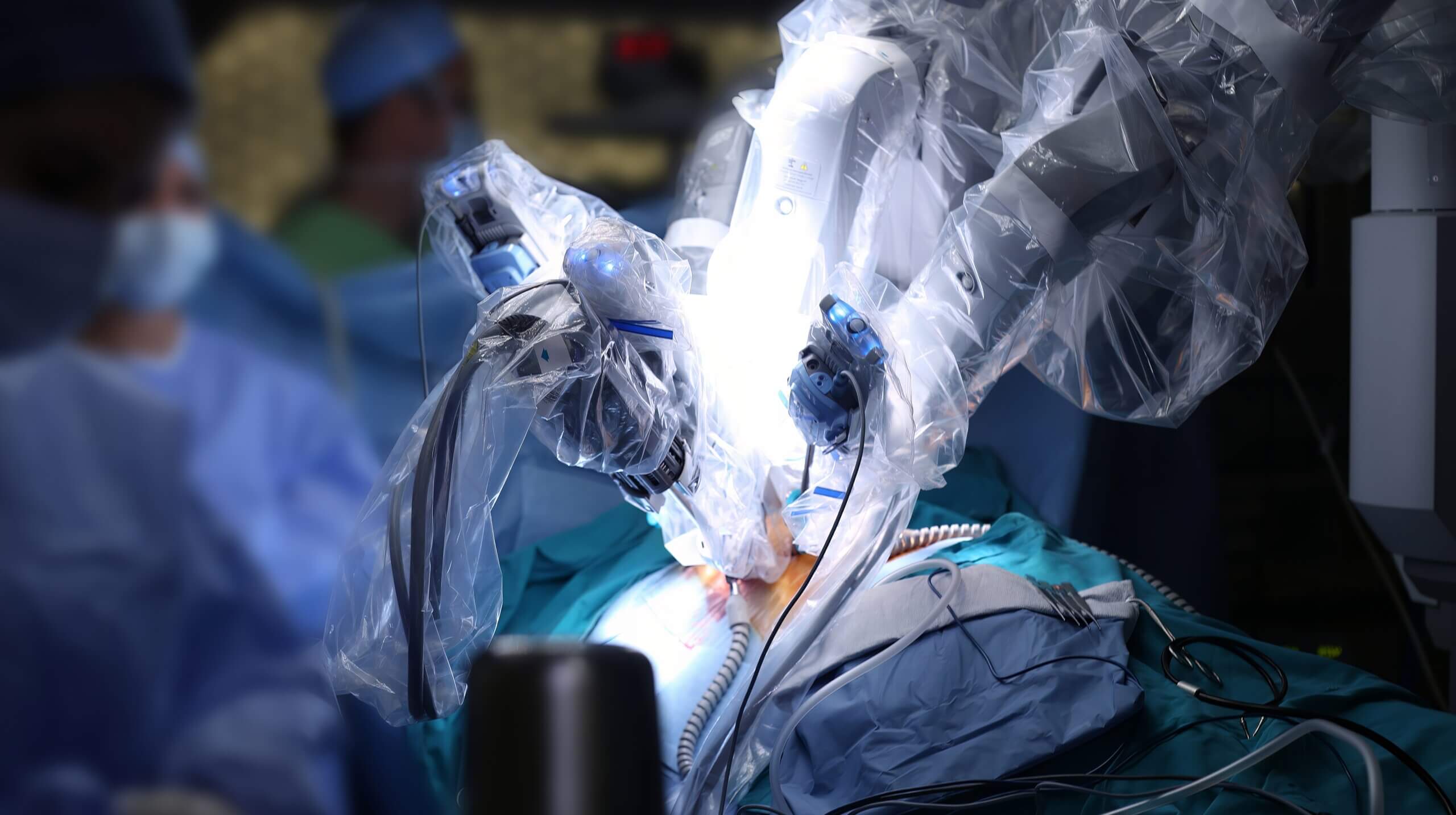
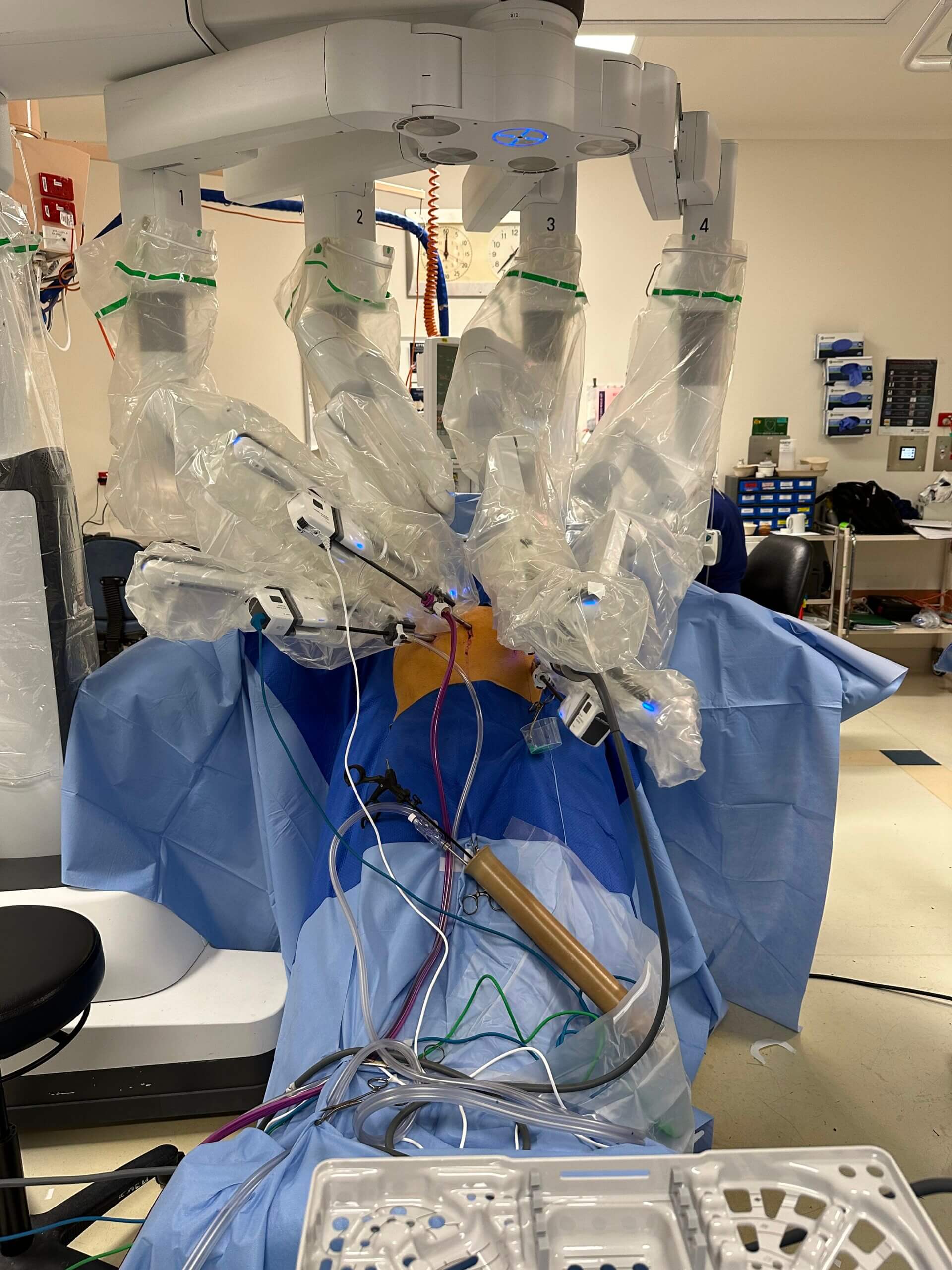
A robot-assisted revision is the same operation as a standard revision, performed using a robotic surgical system. The procedure is done through small keyhole incisions, just as in laparoscopic surgery. A high-definition camera and wristed instruments are passed into the abdomen, and the surgeon operates from a console nearby, controlling the instruments with a refined range of motion.
As with all robotic procedures, the surgeon remains in full control at all times. The technology is used to enhance precision, not replace the surgeon’s skill or judgement.
Why a surgical robot complements revision surgery
If primary bariatric surgery is generally well served by laparoscopy, revision is where the case for the robotic platform becomes clearest. The challenges of revision align very closely with what robotic systems are designed to address.
Scar tissue and adhesions. Tissue that has been operated on before forms a scar that can distort anatomy and obscure normal landmarks. Robotic instruments allow finer, more controlled dissection through these areas, with a magnified, high-definition 3D view of the surgical field.
Distorted anatomy. A previous bypass, sleeve or band changes how the upper stomach and small bowel sit. Robotic wristed instruments move more like a human hand than rigid laparoscopic tools, which helps in tight or unusual angles.
Hand-sewn joins. Many revisions involve creating new connections between stomach and bowel. These are technically more demanding than a primary bariatric anastomosis, and tremor filtration combined with the precision of the robotic platform can be a real advantage during this part of the operation.
Patients with a higher BMI or denser abdominal wall. Revision patients often present with these factors, and robotics can help with access in deeper, more confined parts of the abdomen.
The published evidence is increasingly supportive. A 2024 analysis of more than 40,000 revision bariatric cases in the United States found that robotic revision gastric bypass was associated with reduced morbidity compared with the laparoscopic approach.
Studies of primary bariatric surgery have shown more mixed results, but for revision specifically, the case for the robotic platform is supported by a growing body of evidence.
Where a robotic approach is most useful
Not every revision needs a robotic approach. For straightforward revisions, laparoscopic surgery remains a perfectly good option. A robotic approach is most useful where the technical complexity of the case is high enough to justify it. Examples include:
- Sleeve-to-bypass conversion, where hand-sewn joins are involved
- Band removal with conversion to a sleeve or bypass, particularly when the band has caused significant local scarring
- Bypass revision for a stretched pouch or stretched anastomosis
- Hiatus hernia repair combined with a revision, where space is tight and precision matters
Benefits of a robotic approach in bariatric revision
In revision bariatric surgery, the robotic platform may offer:
- Better visualisation in scarred or distorted anatomy
- More precise dissection through adhesions
- Easier and more controlled hand-sewn joins
- Reduced surgeon fatigue in long, multi-step operations
- A minimally invasive approach in cases where open surgery might otherwise have been considered
Drawbacks and considerations of robotic surgery
Robotic surgery is not without trade-offs:
- Operative times tend to be longer in robotic cases, which is relevant in procedures that are already complex.
- Cost is higher. Robotic equipment is expensive and not all of it is covered by private health funds. Patients should expect a clear discussion of any out-of-pocket gap before surgery.
- It does not eliminate the underlying risks of revision surgery, including bleeding, leak from a join, and the possibility of conversion to laparoscopic or open surgery if required.
A robot is a tool, not a magic bullet. The surgeon still performs the operation. Outcomes depend on careful planning, choosing the right operation for the right patient, and consistent follow-up afterwards.
What to expect from robot-assisted surgery and recovery
Robot-assisted revision is performed under a general anaesthetic. Recovery is broadly similar to a laparoscopic revision, as both are minimally invasive. However, revision recovery is generally a little slower than primary bariatric surgery, because the procedure itself is more involved.
Most patients:
- Stay in hospital for 2–3 days, sometimes longer, depending on the complexity of the revision
- Begin a staged diet plan after surgery, progressing from liquids to soft foods, then to regular meals
- Return to work within two to four weeks, depending on the type of revision and the nature of their job
Long-term success after a revision depends heavily on what comes after the operation. This includes consistent vitamin supplementation, regular follow-up, and, where relevant, support from the dietitian and psychology team to address the behaviours that contributed to the original problem.

Why experience matters in revision surgery
Revision bariatric surgery is more complex than primary surgery, and a surgeon’s experience genuinely matters. At Upper GI Surgery, the practice has performed several hundred revision operations and continues to see new revision patients every week. Patients are accepted regardless of where their original surgery was performed.
When should you seek advice?
If you have had a previous bariatric procedure and are noticing weight regain, persistent reflux, ongoing food intolerance, or other concerning symptoms, a careful assessment is the right place to start. Not every situation needs revision surgery, and not every revision needs a robotic approach. The right plan depends on your history, your symptoms and your goals.
Ready to take the next step?
Contact us to discuss your history, current symptoms and the most appropriate path forward.
0 Comments