
Back to Patient Portal
Learning to recognise fullness after bariatric surgery is one of the most important parts of your new relationship with food. In the early weeks after surgery, your body’s hunger and fullness signals can feel unfamiliar, and that’s completely normal. With time and practice, you’ll learn to understand these new cues and respond before discomfort sets in.

Why does fullness feel different after bariatric surgery?
Your stomach is now smaller and while it empties more quickly, any food you eat will pass more slowly into the stomach; when it arrives there stomach pressure rises quickly to create “full” signals that then switch off hunger. This means it takes less food to feel satisfied, and the sensation of fullness arrives faster. Instead of the “stretched” feeling you may have noticed before surgery, fullness now tends to feel higher in the chest or throat, or as a subtle tightness beneath the sternum.
It’s also important to remember that true fullness can lag behind your last bite by a few minutes. Eating slowly gives your body time to send accurate signals to your brain.
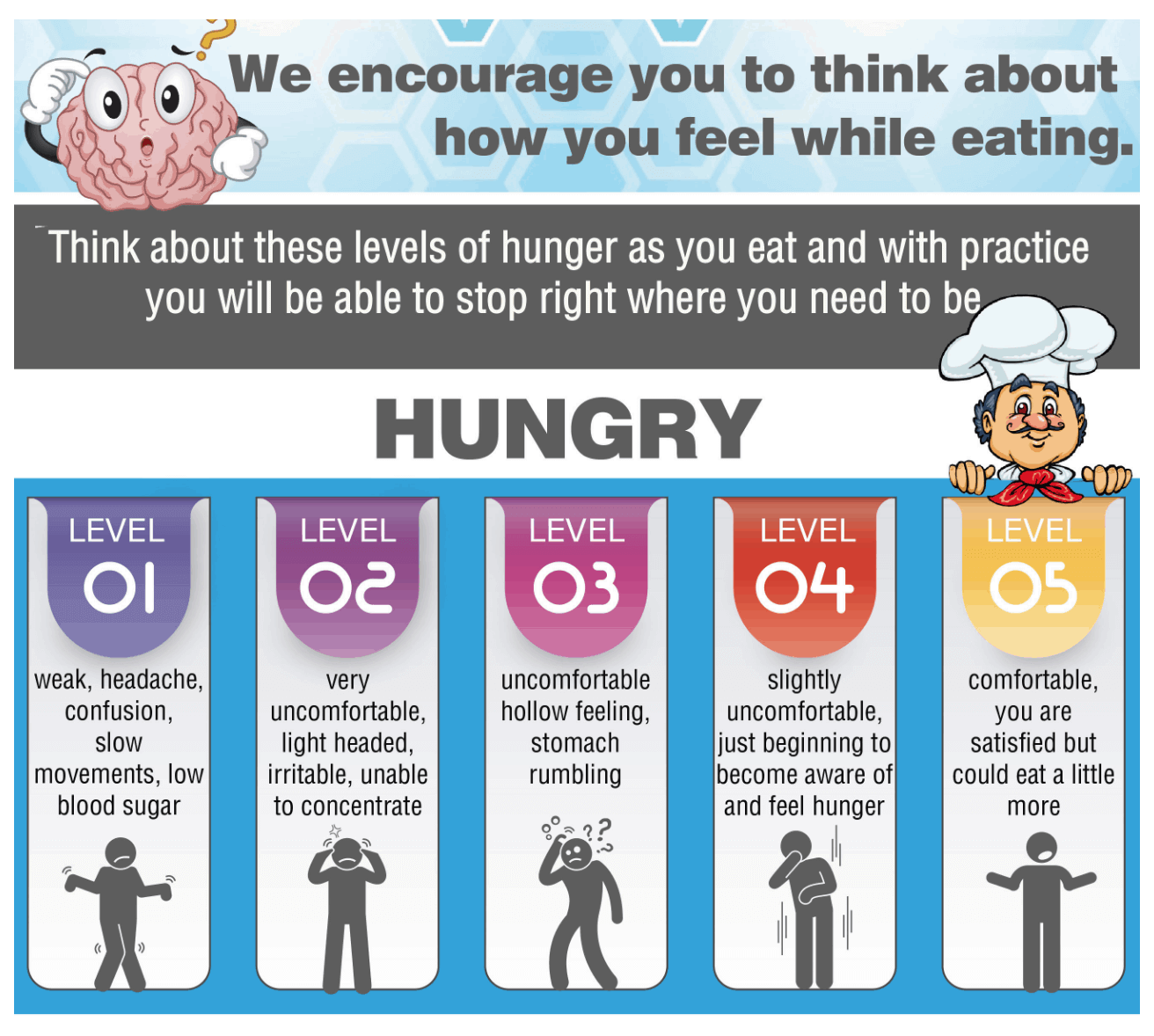
The stages of fullness
Think of fullness as a spectrum rather than an on/off switch. These stages can help you identify where you are and when to stop:
Comfortable satisfaction – you’ve eaten slowly, your bites are small and you feel content. You could easily stop here – this is your ideal endpoint.
Tightness or pressure – you may notice mild pressure in the upper abdomen or chest. This is your body saying, “enough.” Pause and give yourself time; sometimes this feeling builds even after you’ve stopped eating.
Discomfort or nausea – if you push past fullness, you may feel a strong heaviness, bloating, or even regurgitation. This means your pouch is overfilled and needs time to empty.
Pain or vomiting – this is your stomach’s way of saying “too much, too fast.” Stop eating immediately and take note of how it felt leading up to this stage so you can stop earlier next time.


Tips to help you recognise fullness sooner
- Put your fork down between bites. This simple act slows you down and allows signals to catch up.
- Pause mid-meal. Take a break after a few bites – you might realise you’re already satisfied.
- Avoid distractions. Turn off screens so you can pay attention to how your body feels.
- Use smaller plates and cutlery. This encourages portion control without relying on willpower.
- Reflect after eating. Ask yourself, “At what point did I feel comfortable?” Over time, this builds awareness.
Remember, fullness will evolve
As you progress through your recovery, your capacity and signals will change. Early on, fullness may come after a few spoonfuls; months later you’ll be able to enjoy small, balanced meals. The key is to always eat mindfully and stop before discomfort.
If you’re unsure whether you’re eating the right portions or recognising fullness correctly, reach out to your dietitian or bariatric team. They can help you fine-tune your portions and habits to suit your stage of recovery.
0 Comments